
Program Scalability
Organizations scaling AI benefit from a common reference architecture that both business and IT teams can align around. This architecture establishes a shared starting point that balances flexibility with consistency as AI adoption expands.
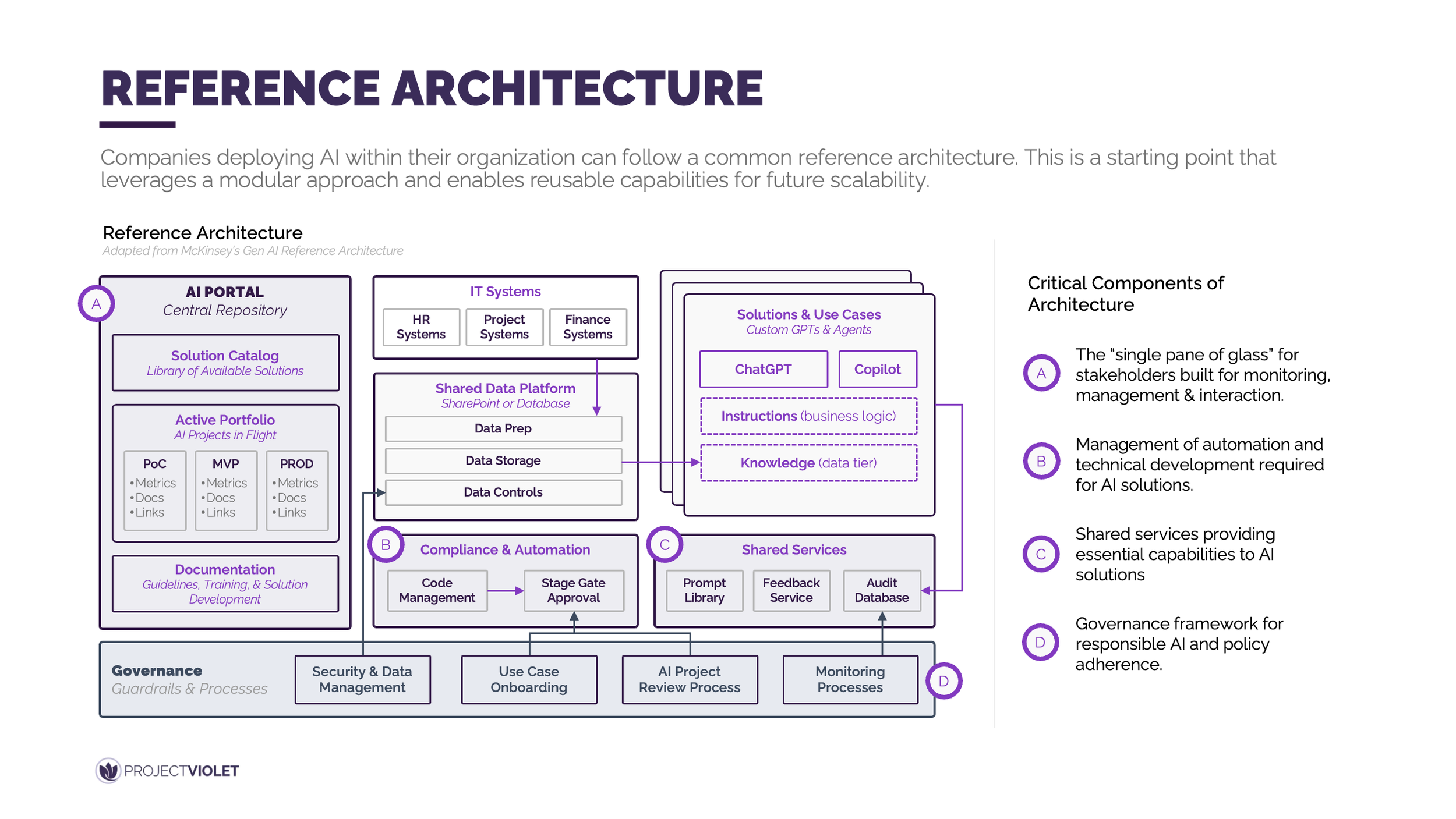
At the center of this architecture is a shared operating model that allows teams to experiment and build AI solutions without fragmenting tools, data, or governance. The AI Portal serves as the single pane of glass, bringing together solution catalogs, prompts, documentation, and active initiatives so stakeholders can see what exists and what is in progress. Surrounding this core are shared data platforms, integrations with existing IT systems, and standardized building blocks for instructions, knowledge layers, and automation. Governance, compliance, and monitoring are embedded from the start through approval gates, auditability, and security controls, ensuring innovation does not outpace oversight.
In practice, this reference architecture enables different teams to move at different speeds while remaining aligned to a common foundation. Organizations can begin with lightweight implementations using familiar tools, then layer in more advanced services as adoption grows. This structure creates the technical and organizational clarity needed to support broader usage, which makes the supporting operating model the next critical consideration.
AI Program Support Structure
As AI usage expands, a defined support structure becomes essential to sustain momentum and prevent friction. This model outlines the operational capabilities required to support users, stabilize solutions, and prepare for broader production rollout.
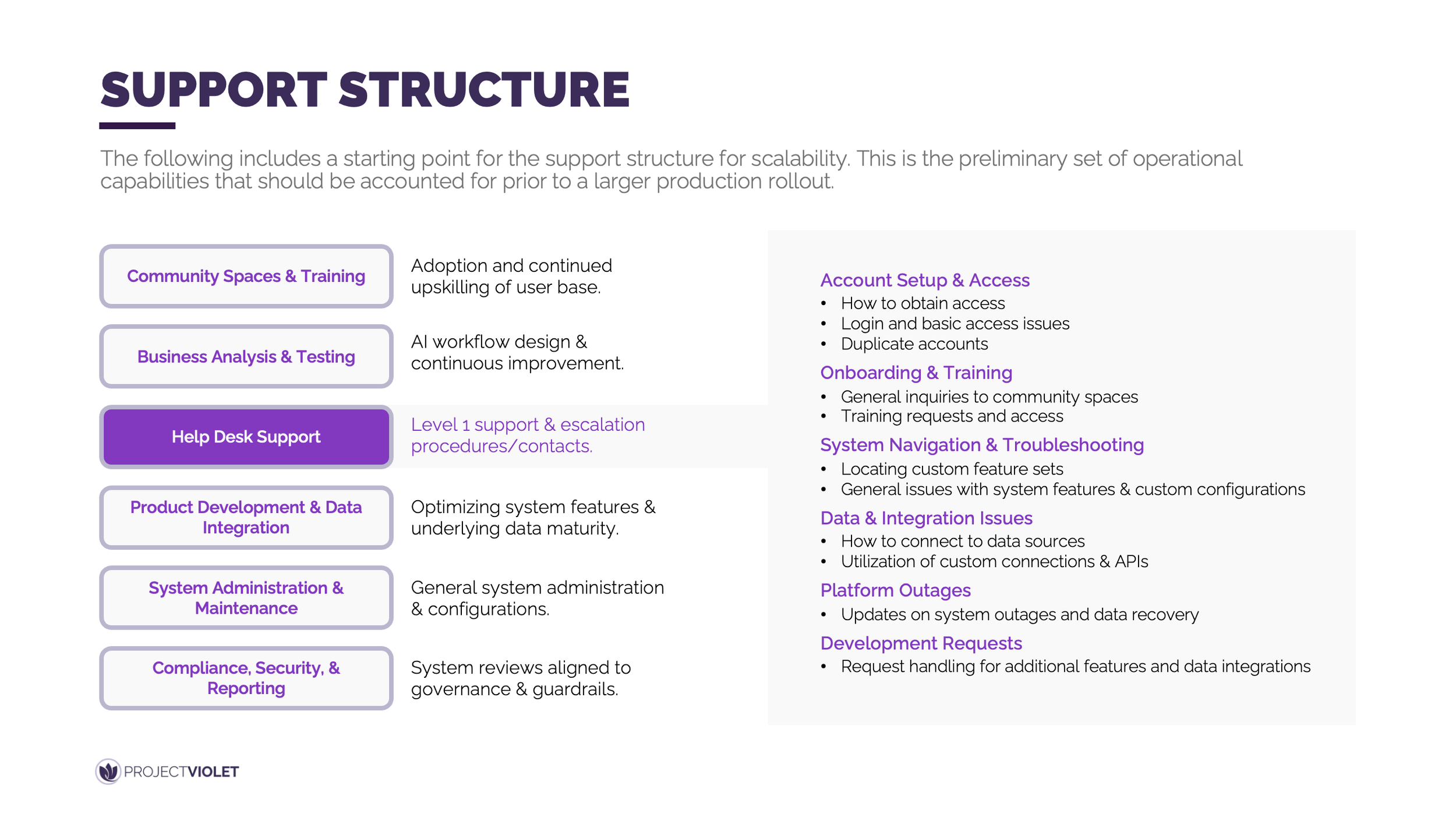
The support structure ensures clear ownership across adoption, issue resolution, workflow improvement, and governance so AI usage can scale without confusion. Help desk support acts as the primary entry point for users, addressing access issues, navigation questions, and escalation paths before they become adoption blockers. Community spaces and training reinforce continued upskilling, while business analysis and testing capture feedback to improve workflows over time. Product development, system administration, and compliance functions then provide the depth needed to mature features, strengthen data foundations, and maintain alignment with enterprise guardrails.
In practice, support signals become a source of insight rather than just a reactive function. Patterns in requests and issues inform training updates, workflow refinements, and prioritization decisions for future development. This closed loop between usage and improvement creates the operational stability required to safely scale experimentation into more formalized AI initiatives.
AI Experimentation to Production Methodology
Scaling AI requires a disciplined approach to experimentation that balances speed with control. This methodology defines a clear path from early proof of concept to enterprise production rollout.
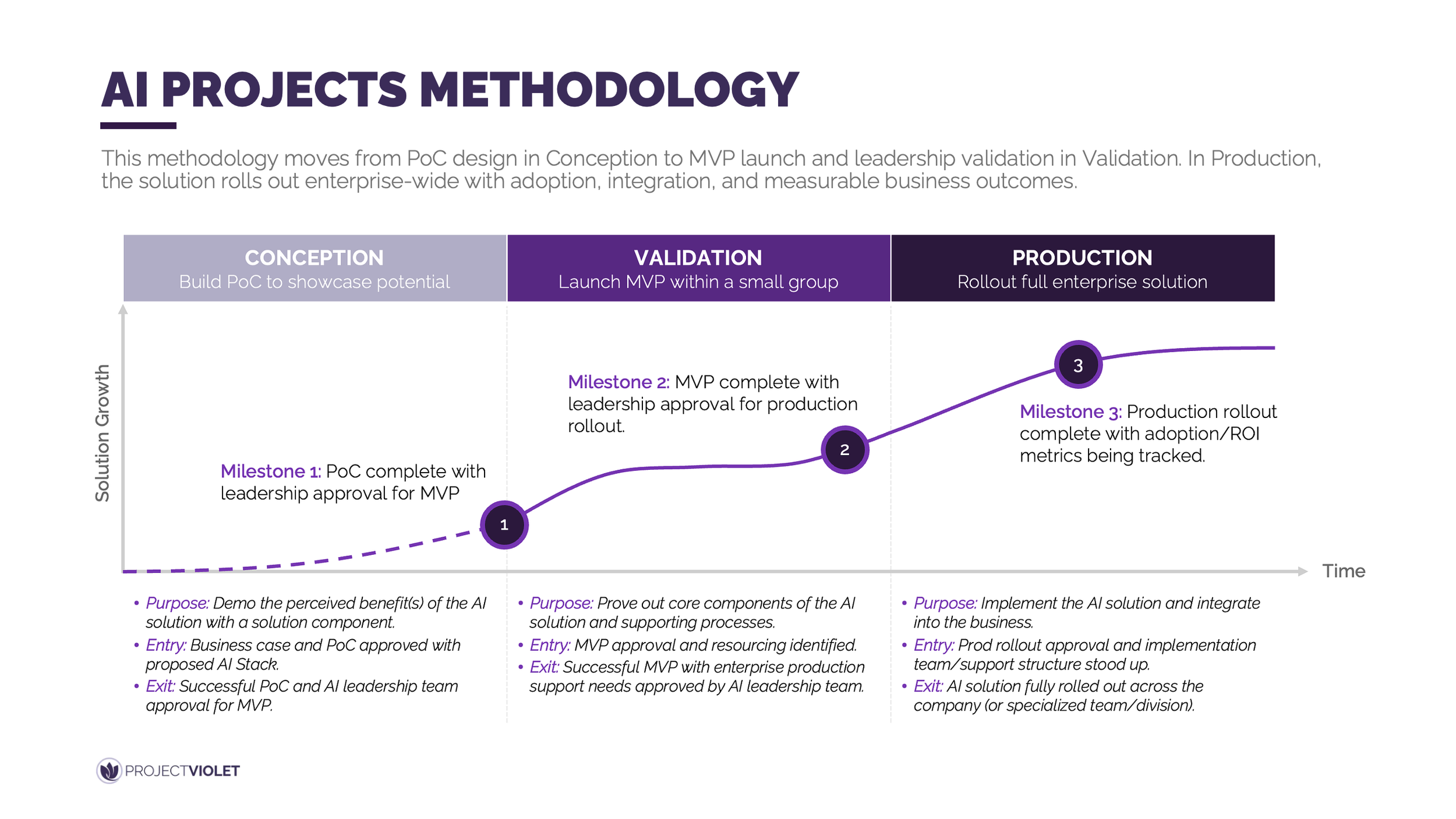
The staged approach allows AI solutions to earn the right to scale by demonstrating value, readiness, and leadership confidence at each phase. In Conception, teams focus on contained proofs of concept that validate potential benefits and alignment with the approved AI stack. Validation shifts attention to durability and usability, launching MVPs with small groups to confirm performance, support needs, and measurable outcomes. Production follows only after these thresholds are met, emphasizing adoption, integration, and ongoing ROI tracking at an enterprise level.
In practice, this methodology creates a shared language for decision-making and investment as solutions mature. Not every experiment progresses to production, and that selectivity protects capacity while preserving momentum. Together with the reference architecture and support structure, this approach enables organizations to move beyond pilots and scale AI in a deliberate, repeatable way that delivers sustained business value.
Return to the table of contents or use the navigation below to continue.
Looking for more support?
Leadership Lab: Learn alongside other leaders as you apply AI in real workflows, share lessons learned, and build the leadership skills needed to guide teams through change. Explore Leadership Lab
AI Pilot Program: Partner with us to design and launch a practical AI pilot program tailored to your organization. Learn More